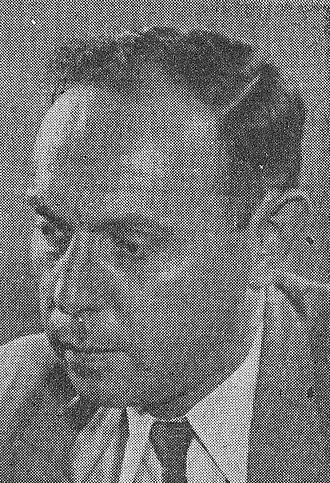
Adam Schaff (1913–2006) was a Polish Marxist philosopher, best known for his work in epistemology and the theory of knowledge. He became one of the most prominent Marxist thinkers in postwar Poland, and his career reflects the tensions between Stalinist orthodoxy and the humanist renewal of Marxism in Eastern Europe.
Born in Lwów (Lemberg) into a family of lawyers, he studied law and economics in Paris and philosophy in Poland. He took a philosophy degree at Moscow University in 1945. After returning to Poland with the Red Army and serving briefly in the Polish resistance as a member of the central committee of the Polish United Workers' Party, he was appointed to the first chair of Marxist philosophy at Warsaw University in 1948. In the Stalinist years he defended party orthodoxy and became its official ideologue.
After Stalin's death he moved toward the humanist current led by Leszek Kołakowski, which placed human beings and their actions at the centre of philosophy and revived historical Marxism as knowledge tied to social context. In later works such as The Crisis of Communism (1982), he came close to the ideas of democratic socialism and Eurocommunism. His books on language, truth and the philosophy of man were widely translated, and his influence lasted in European Marxist debate.
Key ideas
- Marxist theory of knowledge: truth is understood in relation to historical and social practice, not as an abstract correspondence.
- Philosophy of language: the meaning of words and concepts is central to understanding how we know the world.
- Marxist humanism: philosophy should start from the human being and his actions, in dialogue with phenomenology and existentialism.
- Alienation and ideology: an analysis of alienation as a social phenomenon and of ideology as consciousness shaped by society.
- Democratic socialism: a defence of socialism compatible with political pluralism, close to Eurocommunism.
Curiosities
Jewish origin
He was born in Lemberg into a family of lawyers and was of Jewish origin, according to the sources consulted.
A documentary about his life
A documentary produced by Polish public television in 2003, titled No hay otra manera (No Other Way), is available on YouTube.
Original Filopedia text based on Wikipedia (es) and Wikipedia (en) and Wikidata.