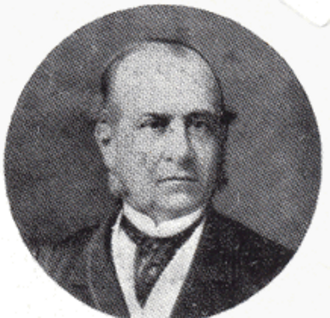
Augusto Vera
1813–1885 · Italian Hegelian philosopher
Augusto Vera (Amelia, 1813 – Naples, 1885) was an Italian philosopher who became the leading figure of Hegelianism in Italy. He is remembered mainly for spreading Hegel's system across several languages at a time when it was still little known outside Germany.
He was educated in Rome and Paris and, after teaching classics in Geneva, taught philosophy at several French institutions, including the Lycée Victor-Duruy in Mont-de-Marsan, later moving to Strasbourg and Paris. After the coup of 1851 he left France and spent nine years in England. Fluent in French, English and Italian, he published translations and commentaries on Hegel. His writing is valued for clarity and seriousness rather than for original doctrine.
In 1860 he returned to Italy to teach at the Accademia scientifico-letteraria in Milan and, a year later, accepted an invitation from Francesco De Sanctis to the University of Naples. There he focused on the history of philosophy and the philosophy of history, themes reflected in works such as Prolusioni alla Storia della Filosofia and Lezioni sulla Filosofia della Storia. His most significant neo-Hegelian work was carried out with Bertrando Spaventa.
His legacy lies in his role within Italian intellectual history. Some scholars have argued that the Italian Hegelian tradition paved the way for Italian Fascism, a view that remains debated.
Key ideas
- Hegelianism as a system: Vera took Hegel's philosophy as a coherent whole and worked to explain it clearly to a wider audience.
- History of philosophy: He regarded the study of thought over time as a way of understanding reason in its development.
- Philosophy of history: He viewed history as the progressive unfolding of reason, following Hegel.
- Italian neo-Hegelianism: Together with Spaventa, he developed an interpretation of Hegelian idealism suited to the Italian context.
Curiosities
Multilingual translator
He wrote fluently in French, English and Italian, which allowed him to spread Hegel's ideas beyond Germany.
English exile
After the 1851 coup in France he spent nine years in England.
Original Filopedia text based on Wikipedia (es) and Wikipedia (en) and Wikidata.