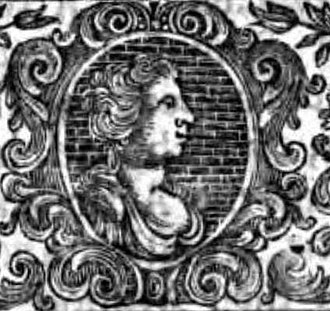
Bernard Mandeville
1670–1733 · Anglo-Dutch philosopher, physician and satirist
Bernard Mandeville (Rotterdam, 1670 – Hackney, 1733) was a philosopher, physician and satirical writer born in the Dutch Republic who spent most of his life in England and wrote nearly all his works in English. A figure of the early Enlightenment, he is remembered above all for The Fable of the Bees, a book that caused scandal in its own day and still shapes debates in the history of economics and ethics.
The son of a physician, he studied medicine and philosophy at Leiden, where in 1689 he defended a thesis supporting the Cartesian view that animals are machine-like. He took his medical degree in 1691 and, after a stay in which he learned English so well that people doubted he was a foreigner, settled in England. There he practised medicine with a good reputation, especially for nervous and stomach complaints. His sociable manner opened doors in London's circles, and he also wrote steadily and studied human nature.
His best-known work began in 1705 as a satirical verse, The Grumbling Hive, about a community of bees that thrives while its members are greedy and collapses once they become honest. In 1714 he expanded it with prose remarks and an essay on the origin of moral virtue, and it was retitled The Fable of the Bees: or, Private Vices, Publick Benefits. His central claim is that human actions cannot be neatly sorted into noble and base, and that appetite for gain and luxury, though morally questionable, sustain employment and prosperity. Mandeville was not praising vice as an ideal; he was describing with irony what he believed real societies did, which is why critics accused him of cynicism.
Later editions added essays on charity and society, and his argument against educating the poor provoked further controversy. Critics such as George Berkeley and William Law attacked him, and in 1729 the book was prosecuted for its supposed immorality. His influence has lasted: Adam Smith engaged with some of his ideas, Rousseau wrote a commentary on him, and much later Friedrich Hayek regarded him as a forerunner of economic liberalism.
Key ideas
- Private vices, public benefits: greed and luxury, though morally troubling, create work and circulation of goods that benefit society as a whole.
- Critique of traditional virtue: for Mandeville, moral virtues arise from pride and flattery rather than from natural goodness.
- Self-interest and the origin of society: social laws and conventions are, in his account, the result of self-interested alliances among the weak seeking protection from the strong.
- The need for skilful government: a prosperous society depends on a clever politician who channels human passions toward the common good.
Books to read
- The Fable of the Bees; Or, Private Vices, Public Benefits EnglishEPUB 669 KBRead online
- An Enquiry into an Origin of Honour; and the Usefulness of Christianity in War EnglishEPUB 178 KBRead online
- A Letter to Dion EnglishEPUB 122 KBRead online
Curiosities
A physician who passed as English
He learned English so well after arriving in England that many refused to believe he was a foreigner.
A jibe at Addison
He described his acquaintance Joseph Addison as "a parson in a tye-wig", a biting image typical of his satirical style.
Teachers and influences
Influenced
- Friedrich Nietzsche 1844–1900
Original Filopedia text based on Wikipedia (es) and Wikipedia (en) and Wikidata.