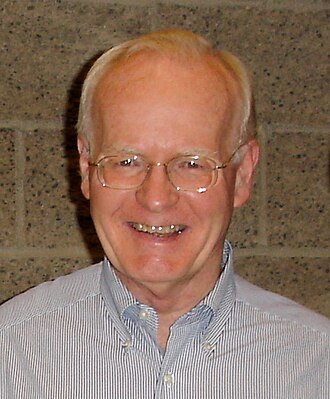
David Ray Griffin
1939–2022 · American philosopher and theologian of process thought
David Ray Griffin (1939-2022) was an American philosopher and theologian, professor emeritus of philosophy of religion and theology. He belonged to process philosophy, the tradition that builds on Alfred North Whitehead and Charles Hartshorne, and his central aim was to think about religion and science within that framework.
Raised in a small town in Oregon, he first grew up within the Disciples of Christ church and earned his doctorate at Claremont in 1970. There he encountered process theology in a seminar led by John B. Cobb on Whitehead. In 1973 he founded the Center for Process Studies with Cobb at the Claremont School of Theology. His books include A Process Christology (1973), Process Theology (1976, with Cobb), God, Power, and Evil (1991) and Reenchantment Without Supernaturalism (2000).
Griffin argued that process theology offered a middle path between supernaturalism, which imagines God breaking into nature with miracles, and a picture in which God exerts the same pressure everywhere at all times. He proposed a postmodern view of reality in which experience is not foreign to matter, and he sought to overcome the conflict between religion and modern science, whose mechanistic worldview he saw as part of the tension.
From 2001 onward he devoted much of his writing to challenging the official account of the September 11 attacks, with claims most specialists and official reports reject. His lasting influence lies mainly in process theology and in the debate over religion and science.
Key ideas
- Process philosophy: reality is understood as a web of events and experiences rather than inert substances.
- Process theodicy: God is not omnipotent in the traditional sense, and evil is treated as a limit on divine power rather than part of a plan.
- Beyond supernaturalism: God acts persuasively in the world without miraculous interventions that break natural laws.
- Reenchanting science: against modern mechanism, he proposes a nature with interiority and value that is compatible with science.
Curiosities
From ministry to philosophy
Griffin considered becoming a minister in his church but grew disillusioned with the conservative theology taught at his college. While studying for a master's degree in counseling, he attended lectures by Paul Tillich in Berkeley and decided to focus on philosophical theology.
An unexpected turn
By his own account, he had not examined the evidence about 9/11 for years. After reading the work of Paul Thompson and Nafeez Mosaddeq Ahmed, he became convinced there were grounds to suspect individuals in the US government and wrote his first book on the subject.
Teachers and influences
Influenced by
- Alfred North Whitehead 1861–1947
Original Filopedia text based on Wikipedia (es) and Wikipedia (en) and Wikidata.