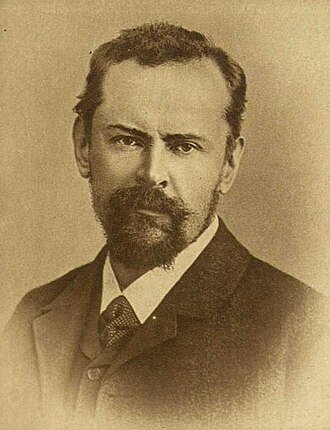
Sergei Nikolaevich Trubetskoy
1862–1905 · Russian religious philosopher and jurist
Prince Sergei Nikolaevich Trubetskoy (1862-1905) was a Russian religious philosopher and jurist from the Moscow aristocracy. As a professor and later rector of Moscow University, he sought to ground an Orthodox Christian view of the world in both faith and reason, continuing the work of Vladimir Solovyov.
After a youthful enthusiasm for positivism, he read Schopenhauer and concluded that the German's pessimism rested on denying God, which gave rise to his famous dilemma: either God exists, or life is not worth living. His master's thesis of 1890, Metaphysics in Ancient Greece, argued that much of Christian theology drew on Greek philosophy. His major work, The Teaching on Logos (1900), placed the personality of Jesus Christ, in whom the human and divine wills unite, at the centre of Christianity, understood as a system of truth reached through special revelation.
He became a full professor in 1902, co-edited the journal Questions of Philosophy and Psychology, and was a founding member of the liberal discussion circle Beseda. Elected rector of Moscow University in 1905, he died a month later of a brain haemorrhage. His legacy also passed through his son, the linguist Nikolai Trubetskoy.
Key ideas
- Schopenhauer's dilemma: pessimism holds only if God is denied, so the choice becomes belief or the conclusion that life is not worth living.
- Greek roots of Christianity: much of Christian theology grew out of the idealist metaphysics of ancient Greece.
- Christocentrism: the personality of Christ, in whom the human and divine unite, is the heart of faith, and the Church continues his Incarnation.
- Truth by revelation: Christianity is not only an ethical code but a system of truth known through special revelation.
Curiosities
His sons, immortalised by a famous sculptor
His uncle, the sculptor Paolo Troubetzkoy, portrayed his sons Nikolai and Vladimir at the Uzkoye estate in 1895, the same summer the family settled there.
A death at a reception
He suffered the brain haemorrhage that killed him during a reception with the minister of education, while the university was caught up in student unrest.
Original Filopedia text based on Wikipedia (es) and Wikipedia (en) and Wikidata.