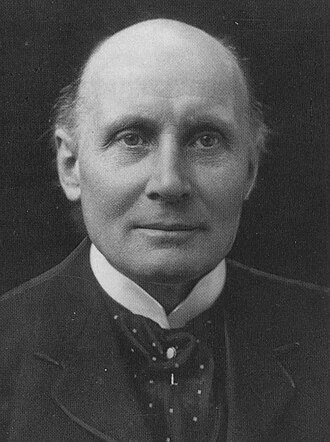
 AuthorAlfred North Whitehead1861–1947
Process and Reality. An Essay in Cosmology is the most ambitious work of Alfred North Whitehead, the English mathematician and philosopher. Published in 1929, it revises the Gifford Lectures he delivered at the University of Edinburgh in 1927 and 1928. Its aim is to build a complete cosmology, that is, a system of ideas that connects aesthetic, moral and religious interests with the conceptions of the world that arise from natural science. Whitehead had earlier worked on logic and mathematics, notably on A Treatise on Universal Algebra and, with Bertrand Russell, on Principia Mathematica. The static character of those formal structures contrasted with his sense that change is inevitable, and this led him to take the temporal factor seriously in his thought.
The core of the book is a "philosophy of organism", also called process philosophy. In it the universe is a dynamic whole whose elements are linked like the organs of a body: each finds its unity in the life of the whole and is, in turn, an organic centre of lesser elements. Against the stable substance of the Aristotelian tradition, Whitehead holds that what is real are events, or "actual entities", units of experience that arise, respond to others and reach completion. Each is, at bottom, a process of grasping or "prehending" other entities. The phenomena of experience are understood as particular realizations of an ideal world of possibilities, the "eternal objects", in a line of thought that recalls Plato's world of forms. God holds an exceptional place in the system: he is the only entity that is both temporal and atemporal, present in every occasion without being himself an eternal object.
The book is organized in five parts that treat the same material from increasingly deep perspectives: the speculative scheme, discussions and applications in dialogue with modern philosophy (Descartes, Newton, Locke, Hume and Kant), the theory of prehensions, the theory of extension, which draws on modern physics and mathematics, and a final interpretation concerning the ultimate purpose of life and the universe and the relation between God and the world. The overall tone has a mystical undercurrent.
The book was little read in its own time, and its influence later concentrated in the philosophy of religion, ecological thought and subsequent process thinking, where its vocabulary and intuitions remain a point of reference. In the Spanish-speaking world a first translation by José Rovira Armengol appeared in 1958 through Losada, and the corrected 1978 edition only became available in Spanish in 2021, translated and introduced by Miguel Candel Sanmartín for Atalanta.
Themes
Original Filopedia text based on Wikipedia (es) and Wikipedia (en) and Wikidata.