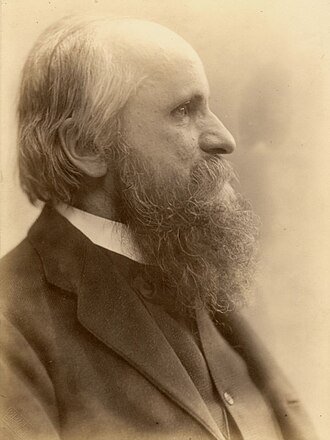
Alexius Meinong
1853–1920 · Austrian philosopher and psychologist of the act psychology school
Alexius Meinong (Lemberg, 1853 – Graz, 1920) was an Austrian philosopher and psychologist, a pupil of Franz Brentano and a member of the school of act psychology. He is remembered above all for his theory of objects, one of the most debated ontologies of the early twentieth century, and for his role in building experimental psychology at Graz.
He studied law and then history at the University of Vienna, and in the academic year 1874–1875 turned to philosophy under Brentano's guidance. He earned a doctorate in history with a thesis on Arnold of Brescia. In 1878 he moved to the University of Graz, where he rose to professor and remained until his death. In 1894 he founded the Graz Psychological Institute, the centre of the so-called Graz school of experimental psychology, and supervised doctorates such as that of Christian von Ehrenfels, linked to Gestalt psychology.
His best-known work, Theory of Objects (1904), starts from a simple observation: we can think about a golden mountain even though no such thing exists. Meinong concluded that whatever we think about must have some kind of being, and he separated that being from existence. Objects, in his view, may exist, as mountains do; subsist, as numbers and theorems do without occupying time or space; or merely be given, as impossible objects do. His most controversial claim was that existence is not simply one more property of an object but a distinct ontological status. Bertrand Russell criticised the crowd of nonexistent entities, though for a time he shared many of Meinong's ideas.
His influence reaches the philosophy of language, the philosophy of mind and the theory of value. Today he is read as the thinker who tried to give a rigorous place to what does not exist, a problem that still matters in analytic philosophy.
Key ideas
- Theory of objects: whatever can be thought of has some kind of being, even if it does not exist.
- Being and existence: existence is only one mode of being; objects can be without existing.
- Subsistence: entities such as numbers or geometric figures have a timeless mode of being, without material existence.
- Psychological acts: presenting, thinking, feeling and desiring correspond to different kinds of intentional objects.
Curiosities
A history thesis
Before turning to philosophy, Meinong earned his doctorate in history with a thesis on Arnold of Brescia.
Meinong's jungle
Critics ironically nicknamed the crowd of nonexistent objects 'Meinong's jungle', because of their number and exotic nature.
Teachers and influences
Teachers
- Franz Brentano 1838–1917
Influenced
- Bertrand Russell 1872–1970
Original Filopedia text based on Wikipedia (es) and Wikipedia (en) and Wikidata.