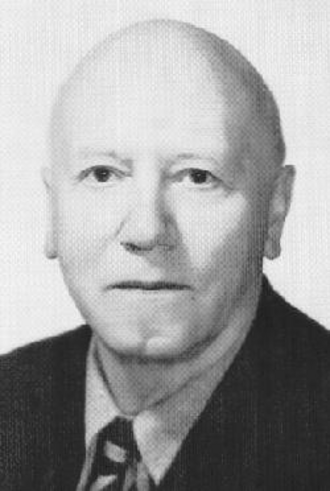
C. D. Broad
1887–1971 · English philosopher of epistemology, historian of philosophy and scholar of psychical research
Charlie Dunbar Broad, known as C. D. Broad (Harlesden, Middlesex, 1887–1971), was an English philosopher who worked on epistemology, the history of philosophy, the philosophy of science and ethics, as well as on the philosophical side of psychical research. He is remembered for his thorough and even-handed examinations of arguments in books such as The Mind and Its Place in Nature (1925) and Examination of McTaggart's Philosophy (1933–1938).
He studied at Trinity College, Cambridge, graduating with First-Class Honours in 1910 and becoming a Fellow the following year. After teaching at St Andrews and Bristol, he returned to Cambridge, where he held the Knightbridge Chair of Moral Philosophy from 1933 to 1953. He served as president of both the Aristotelian Society and the Society for Psychical Research.
Broad distinguished critical philosophy, which analyses everyday and scientific concepts and tests them against every objection available, from speculative philosophy, which seeks a view of reality as a whole. He regarded philosophy and science as complementary. In the free will debate, his 1952 essay on determinism, indeterminism and libertarianism introduced the terms occurrent and non-occurrent causation, which underlie the modern distinction between agent causation and event causation. His influence remains visible in epistemology and in discussions of free will.
Key ideas
- Critical analysis: testing everyday and scientific concepts against the widest possible range of objections.
- Speculative philosophy: building a view of reality as a whole that accounts for all of human experience.
- Non-occurrent causation: a free action is determined by the agent as a continuing self, not by a chain of prior events.
- Empirical propositions: a distinction between inspective propositions, which report what the mind directly notices, and inferred propositions, derived from perceptions by induction or deduction.
- Psychical research: if psychic phenomena were proven, they would challenge philosophical principles such as the impossibility of backward causation or of interaction between mind and body.
Curiosities
Public support for decriminalisation
In 1958 he signed, along with A. J. Ayer and Bertrand Russell, a letter to The Times urging acceptance of the Wolfenden Report's recommendation that homosexual acts should no longer be a criminal offence.
Teachers and influences
Influenced by
- Bertrand Russell 1872–1970
- Alfred North Whitehead 1861–1947
- G. E. Moore 1873–1958
Original Filopedia text based on Wikipedia (es) and Wikipedia (en) and Wikidata.