Origins and training
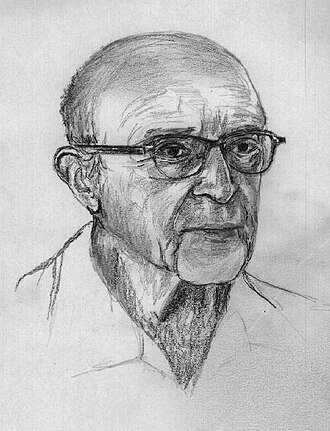
Carl Ransom Rogers was born on January 8, 1902, in Oak Park, a suburb of Chicago, Illinois. He was the fourth of six children. His father, Walter A. Rogers, was a civil engineer and a Congregationalist; his mother, Julia M. Cushing, was a homemaker and a devout Baptist. He grew up in a strict religious environment which, by his own account, made him isolated, independent and disciplined. He could read well before kindergarten.
In 1914 the family moved to the countryside, where Rogers devoted himself to farming and raising animals. In 1919 he enrolled in the College of Agriculture at the University of Wisconsin–Madison, but he soon switched to history and finally to religious studies. In 1922 he travelled to Beijing, China, to attend an international Christian conference organised by the World Student Christian Federation. The experience let him compare Western and Eastern cultures, and he began to doubt his religious convictions.
From the seminary to psychology
To clarify his vocation he attended a seminar titled "Why Am I Entering the Ministry?", after which he decided to change careers. In 1924 he graduated from Wisconsin, married Helen Elliott, a fellow student and Oak Park resident, and enrolled at the Union Theological Seminary in New York. He later left theological study and turned to educational psychology at Teachers College, Columbia University, earning a master's degree in 1927 and a doctorate in 1931. During this period he carried out scientific studies of children and, as an intern at the Institute for Child Guidance in New York in 1927–1928, he studied with the psychologist Alfred Adler.
In 1930 he became director of the Society for the Prevention of Cruelty to Children in Rochester, New York. From 1935 to 1940 he lectured at the University of Rochester and published The Clinical Treatment of the Problem Child (1939), based on his work with troubled children. His client-centred approach was strongly shaped by the post-Freudian practice of Otto Rank, especially through the clinician and social work educator Jessie Taft, a disciple of Rank.
Client-centred therapy
In 1940 he became professor of clinical psychology at Ohio State University, where he wrote Counseling and Psychotherapy (1942). He argued that a client, by forming a relationship with an understanding and accepting therapist, could resolve difficulties and gain the insight needed to restructure their life. This idea laid the foundations for what he called client-centred therapy, a cornerstone of the humanistic movement.
In 1945 he was invited to set up a counselling centre at the University of Chicago, where he taught until 1957. There he studied the effectiveness of his methods and published his findings in Client-Centered Therapy (1951) and Psychotherapy and Personality Change (1954). Some of his students went on to develop their own work: Thomas Gordon founded the Parent Effectiveness Training movement, and Eugene Gendlin developed the method of focusing from what he and other students observed about clients who achieved successful therapeutic outcomes. In 1947 Rogers was elected president of the American Psychological Association, and in 1956 he became the first president of the American Academy of Psychotherapists.
Later career and social engagement
From 1957 to 1963 he taught at the University of Wisconsin–Madison, where he wrote one of his best-known books, On Becoming a Person (1961). Together with Abraham Maslow he pioneered humanistic psychology, which peaked in the 1960s. In 1961 he was elected a Fellow of the American Academy of Arts and Sciences. In the 1950s he questioned the rise of McCarthyism, and in his final years he applied his ideas to conflicts across the world, facilitating dialogue between Protestants and Catholics in Belfast, between Black and White South Africans, and among people making the transition to democracy in Brazil.
In 1963 he moved to La Jolla, California, to join the Western Behavioral Sciences Institute, and in 1968 he founded the Center for Studies of the Person. He remained in La Jolla for the rest of his life, practising therapy, giving talks and writing. His later books include Carl Rogers on Personal Power (1977) and Freedom to Learn for the '80s (1983). Between 1974 and 1984 he and his daughter Natalie Rogers, together with other psychologists, ran a series of person-centred workshops in the United States, Europe, Brazil and Japan.
Thought and the theory of the self
Rogers's theory of the self is humanistic, existential and phenomenological. It rests directly on the "phenomenal field" theory of personality put forward by Arthur Combs and Donald Snygg (1949). He held that each person lives in a continually changing world of experience, of which they are the centre, and reacts to that field as it is perceived. From this experience the self gradually differentiates, its structure formed above all through evaluative interaction with others.
According to his view, the organism has a basic tendency to actualise, maintain and enhance itself, and the best way to understand behaviour is from the individual's own internal frame of reference. When an experience contradicts one's self-image it may be perceived as a threat, and psychological maladjustment arises when a person denies awareness of significant experiences. For Rogers, therapy meant creating a climate of acceptance in which such experiences could be integrated.
His written output was large: he wrote sixteen books and many articles. Prochaska and Norcross (2003) note that he consistently championed the empirical evaluation of psychotherapy, and that he and his followers showed that a humanistic approach to conducting therapy and a scientific approach to evaluating it need not be incompatible.
Recognition and legacy
Rogers is regarded as one of the founding figures of psychotherapy research. In 1956 he received the American Psychological Association's Award for Distinguished Scientific Contributions, and in 1972 its Award for Distinguished Professional Contributions. In a study by Steven J. Haggbloom and colleagues he ranked as the sixth most eminent psychologist of the twentieth century and second among clinical psychologists, behind only Freud. A 1982 survey of 422 American and Canadian psychologists rated him the most influential psychotherapist in history.
His approach was applied in psychotherapy, counselling, student-centred education and organisations. He died on February 4, 1987, in San Diego, California, after a fall, a successful operation, and a pancreatic failure followed by a heart attack.
Key ideas
- Phenomenal field: each person perceives the world from their own experience, and that perception is reality for them.
- Formation of the self: the self takes shape through interaction with the environment, especially the evaluations received from others.
- Actualizing tendency: the organism has a basic drive to maintain, develop and enhance itself.
- Unconditional positive regard: a climate without threat, with empathic listening and genuineness, allows the client to recognize what they live and change.
Curiosities
From seminary to doubt
After his trip to China, he attended a seminar titled Why Am I Entering the Ministry? There he decided to change careers.
A CIA-funded foundation
In the late 1950s and the 1960s he served on the board of the Human Ecology Fund, a CIA-funded organization that gave grants for research on personality.
Teachers and influences
Influenced by
- Otto Rank 1884–1939
Original Filopedia text based on Wikipedia (es) and Wikipedia (en) and Wikidata.