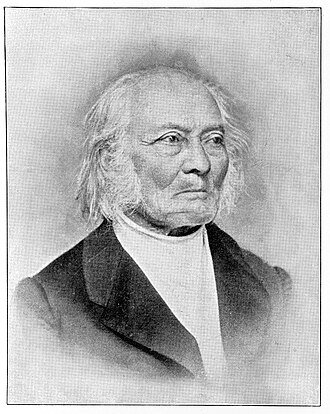
Ernst Heinrich Weber
1795–1878 · German physician and physiologist, one of the founders of experimental psychology
Ernst Heinrich Weber (Wittenberg, 1795 – Leipzig, 1878) was a German physician and physiologist widely regarded as one of the founders of experimental psychology. He worked in the nineteenth century, when physiology was becoming an established academic discipline, and his studies of the senses built a bridge between anatomy and the study of the mind.
He grew up in an academic household, since his father taught theology at Wittenberg. As a young man he became drawn to physics, partly under the influence of Ernst Chladni, often called the father of acoustics. Weber studied medicine at Wittenberg and earned his doctorate in 1815. The Napoleonic wars forced him to leave his hometown, and he settled in Leipzig, where he spent his entire academic career: he became professor of anatomy in 1818 and retired in 1871.
His first direct contribution to psychology came in 1834, with a study of the sense of touch. Weber noticed that we do not register the absolute difference between two stimuli but the relation between them. To notice that a weight has changed, the change must bear a constant proportion to the original weight. This idea became known as the just-noticeable difference. Gustav Theodor Fechner, his collaborator, gave the regularity its name as Weber's law and later built his own formulation on it, using more refined measurement methods. Weber also mapped the sharpness of touch with the two-point threshold, using a pair of compass points.
Working alongside his brothers Wilhelm and Eduard, he studied blood circulation and the elasticity of the blood vessels. His Wellenlehre auf Experimente gegründet (1825) describes the flow of waves in liquids and elastic tubes, although its application to the circulation of the blood was not published in full until 1850.
His legacy lies above all in method. Unlike many colleagues who worked at a desk, Weber experimented with real people and varied one factor at a time. Edward Titchener called his book on touch "the foundation stone of experimental psychology".
Key ideas
- Just-noticeable difference: we perceive the relative difference between two stimuli, not the absolute one.
- Weber's law: the change needed to notice a difference keeps a constant proportion to the original intensity, although it fails at the extremes of each sense.
- Two-point threshold: the smallest distance at which two points are felt as two rather than one, a distance that varies across the body.
- Experimental method: changing a single variable at a time and measuring sensory phenomena with precision.
Curiosities
An early calling
His interest in physics grew under the influence of Ernst Chladni, the physicist often called the father of acoustics.
A lasting verdict
The psychologist E. B. Titchener described his book on the sense of touch as "the foundation stone of experimental psychology".
Family work
In 1821 he began a series of experiments on fluid physics applied to blood with his younger brother Wilhelm.
Teachers and influences
Pupils
- Hermann Lotze 1817–1881
Original Filopedia text based on Wikipedia (es) and Wikipedia (en) and Wikidata.