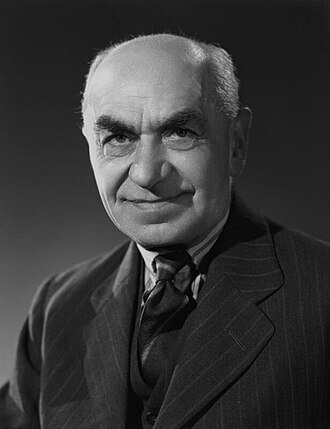
Frederic Bartlett
1886–1969 · British psychologist, forerunner of cognitive psychology
Sir Frederic Charles Bartlett (1886–1969) was a British psychologist and the first professor of experimental psychology at the University of Cambridge, a post he held from 1931 to 1951. He is regarded as one of the forerunners of cognitive psychology and of cultural psychology. Although he was interested in philosophy, ethics, anthropology and sociology, he preferred to see much of his own work as social psychology, and he liked to call himself a Cambridge psychologist, since a single narrow specialisation was never his aim.
Born into a middle-class family in Gloucestershire, he was seriously ill with pleurisy as a boy and was educated at home for part of his schooling. His childhood illnesses also kept him out of the First World War. He studied philosophy and moral sciences, and at Cambridge he came under the influence of Charles Samuel Myers, director of the psychology laboratory, and later took over its running. His first psychology book, Psychology and Primitive Culture (1923), examined human behaviour through ethnographic sources and argued against Lucien Lévy-Bruhl's idea of a 'primitive mind'. His best-known work, Remembering (1932), gathered experiments on memory using figures, photographs and stories.
Bartlett's central claim was that remembering is reconstruction rather than faithful copying. People draw on schemas, mental frameworks shaped by their experience, culture and interests, so details that do not fit are dropped or changed into more familiar forms. His 'War of the Ghosts' study, a story of Native American origin, showed English participants reshaping it to suit their own culture. In Thinking (1958) he extended this approach to thought, which he saw as a high-level, socially embedded activity.
During the Second World War he led the Applied Psychology Unit of the Medical Research Council, which worked on problems set by government and the military, and he was knighted in 1948. His influence remains in the study of memory, schema theory, cultural psychology and ergonomics, where the Bartlett medal is still awarded in his name.
Key ideas
- Reconstructive memory: remembering rebuilds the past from schemas rather than reproducing it exactly.
- Schemas: mental frameworks built from experience, culture and interests that organise what we perceive and recall.
- Cultural influence: stories change in memory to fit the cultural frame of the person remembering them.
- Social thinking: thought is a high-level ability that is best understood in its social context.
Curiosities
A medal in his name
The UK Ergonomics Society still awards a Bartlett medal in his honour, and the Experimental Psychology Society holds an annual Bartlett Lecture.
Christmas Lectures
In 1948 he gave the Royal Institution Christmas Lectures on The Mind at Work and Play, the same year he was knighted.
Original Filopedia text based on Wikipedia (es) and Wikipedia (en) and Wikidata.