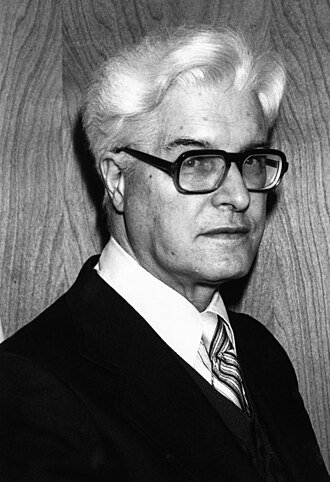
Henri Ellenberger
1905–1993 · Swiss-Canadian psychiatrist and historian of psychiatry
Henri F. Ellenberger (1905-1993) was a psychiatrist, medical historian and criminologist of Swiss origin who became a Canadian. He is sometimes regarded as the founding historiographer of psychiatry, and he is chiefly remembered for his history of dynamic psychiatry, which traces the roots of psychoanalysis and psychotherapy from their earliest precursors to the figures of the twentieth century.
Born in what was then British Rhodesia to Swiss parents, he spent his childhood there. He later became a French citizen, trained in medicine and psychiatry in Paris, and worked at the Hôpital Sainte-Anne under his teacher Henri Baruk. After the rise of the Vichy government he moved to Switzerland, where he underwent a training analysis with Oskar Pfister. In 1953 he made a significant change of direction by joining the Menninger Clinic in Topeka, Kansas. He later moved to Montreal, where he became professor of criminology and did pioneering work on victimology.
His major book, The Discovery of the Unconscious (1970), follows dynamic psychiatry from eighteenth-century exorcism through mesmerism and Charcot to Freud, Adler and Jung. Ellenberger placed these ideas within their social and historical settings, and he insisted on the reality of the unconscious while keeping a critical distance from any single school. Beyond that book he published about thirty-five historical articles, and he also wrote booklets in Esperanto. His influence on historians of psychology is lasting, though he remained something of an independent figure within the psychiatry of his time.
Key ideas
- History of dynamic psychiatry: a study of the origins of psychoanalysis and psychotherapy, from exorcism and hypnotism to the great figures of the twentieth century.
- Reality of the unconscious: the conviction that the unconscious is a real phenomenon that psychiatry must take seriously, however difficult it is to study.
- Socio-historical context: psychiatric ideas are best understood when placed within their historical and cultural circumstances.
- Creative illness: a concept suggesting that certain psychic crises can have a transformative value, later applied by other authors to the study of Jung.
Curiosities
Writings in Esperanto
Ellenberger wrote forty booklets entirely in Esperanto, alongside his work in French and English.
A change of direction in 1953
Joining the Menninger Clinic in Topeka marked a significant turn in his professional career.
Teachers and influences
Influenced
- Rollo May 1909–1994
Original Filopedia text based on Wikipedia (es) and Wikipedia (en) and Wikidata.