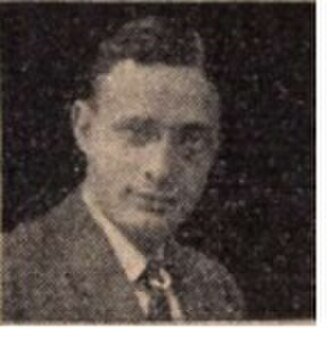
Michael Balint
1896–1970 · Hungarian-British psychoanalyst, figure of the object relations school
Michael Balint (Budapest, 1896 – London, 1970) was a Hungarian-born psychoanalyst who spent most of his adult life in England. He is regarded as one of the leading figures of the object relations school and of the British independent tradition in psychoanalysis. Born Mihály Mór Bergsmann, the son of a Budapest doctor, he changed his name and his religion against his father's wishes. After serving in the First World War, he completed his medical studies in 1918 and trained under Sándor Ferenczi and, in Berlin, Karl Abraham.
After a period in Berlin and another in Budapest, where he led the psychoanalytic institute, he left Hungary in 1939 as political pressure on Jews mounted. In London he joined the Tavistock Institute and, working with his second wife Enid Eichholz, began the so-called Balint groups in 1950, where general practitioners discuss their relationships with patients. In 1968 he became president of the British Psychoanalytical Society.
His thought centres on the idea of a basic fault: a sense of something missing in the early two-person relationship, prior to the Oedipal conflict. For such patients Balint argued that the analyst should first contain rather than interpret. His work on primary love and regression had a lasting effect on brief psychotherapy and on clinical practice in medicine.
Key ideas
- Basic fault: an early deficiency in the two-person relationship, prior to the Oedipal conflict, felt as emptiness and apathy.
- Ocnophilia and philobatism: two opposed attitudes to relationships, clinging to objects or seeking thrill and distance.
- Regression: the longing, pursued through love, religious ecstasy or artistic creation, for a harmony associated with early life.
- Focal psychotherapy: a brief therapy centred on one specific problem of the patient.
- Balint groups: meetings where doctors examine their relationships with patients from a psychodynamic perspective.
Original Filopedia text based on Wikipedia (es) and Wikipedia (en) and Wikidata.