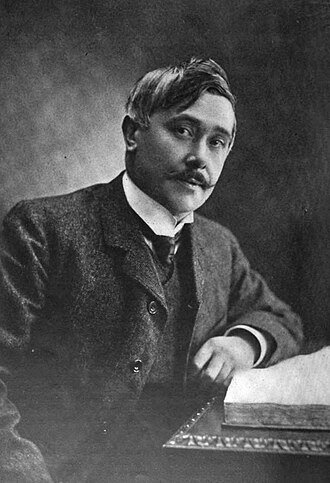
 AuthorMaurice Maeterlinck1862–1949
The Blind is a one-act play written in 1890 by the Belgian playwright Maurice Maeterlinck. It was originally written in French and later translated into several languages, including English and German. It is one of the works listed as among Maeterlinck's most characteristic plays in the speech given to honour him with the Nobel Prize in 1911.
Unlike most theatrical works, it does not introduce readily shaped characters but twelve depersonalised beings. They have no names, only titles describing their general condition, such as the eldest blind man. This method invites the reader or theatre professional to read between the lines and interpret the piece according to personal sensibility. The play is considered a study of the human condition in general, and it confronts its reader with the effect of hope upon them.
Maeterlinck is regarded as the founder of a new type of dramatic writing, Symbolism. Parallels are often drawn with Samuel Beckett's Waiting for Godot, which constructs a similar world of waiting and hoping.
Themes
Other works by Maurice Maeterlinck
Original Filopedia text based on Wikipedia (en) and Wikidata.