Letters Written During a Short Residence in Sweden, Norway, and Denmark
epistolary travel narrative and memoir · 1796
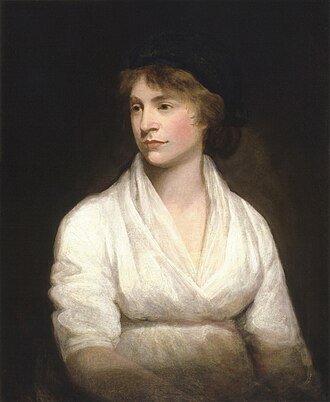 AuthorMary Wollstonecraft1759–1797
Letters Written During a Short Residence in Sweden, Norway, and Denmark is a book published in 1796 by the British writer Mary Wollstonecraft. It consists of twenty-five letters that combine travel description with social, political and philosophical reflection. It was the last book Wollstonecraft saw published in her lifetime, issued by Joseph Johnson, who had been her main publisher for much of her career.
The journey had both a practical and a personal motive. In 1795 Wollstonecraft travelled to Scandinavia to negotiate, on behalf of her lover, the American trader Gilbert Imlay, the recovery of a ship and a cargo of gold and silver tableware that had been taken from him. She also hoped the trip would revive a relationship that was already failing. Over the three months of the tour she came to see that Imlay had no intention of renewing it. The letters draw partly on her journal and partly on the messages she sent to Imlay, and they convey the anger and melancholy produced by his repeated betrayals. For this reason the book is at once a travel account and a personal memoir. It is worth noting that Wollstonecraft had attempted suicide shortly before leaving and tried again after returning to England; death is a recurring theme in the text.
Thematically, the work mixes observations on Scandinavian society with political debate: prison reform, land rights, divorce laws, the effects of commerce on social life. Drawing on the rhetoric of the sublime, the author explores the relationship between self and society, values subjective experience, especially in relation to nature, and argues for the education and emancipation of women. Her political remarks extend the ideas of her work on the French Revolution, and her discussion of prisons draws on her own experience and that of friends imprisoned during the Terror.
Although it looks like a travel book, scholars describe it as a generic hybrid combining travelogue, autobiography and epistolary novel. Two threads unify the text: her argument about the nature and progress of society, and a melancholy that deepens as the book advances.
The reception was favourable. It was her most popular book of the 1790s, and her future husband, the philosopher William Godwin, praised it warmly. It influenced Romantic poets such as William Wordsworth and Samuel Taylor Coleridge. Its reputation declined, however, after Godwin's 1798 memoir of his wife revealed Wollstonecraft's unconventional private life.
Themes
Books to read
- Letters Written During a Short Residence in Sweden, Norway, and Denmark EnglishEPUB 210 KBRead online
Other works by Mary Wollstonecraft
Original Filopedia text based on Wikipedia (es) and Wikipedia (en) and Wikidata.