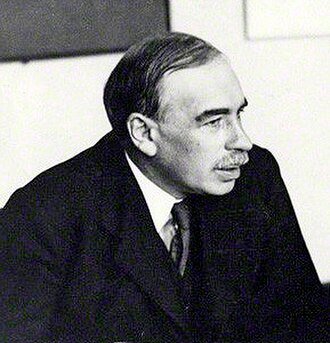
 AuthorJohn Maynard Keynes1883–1946
The Economic Consequences of the Peace is a book by the British economist John Maynard Keynes, published in 1919 shortly after the signing of the Treaty of Versailles that ended the First World War. Keynes had attended the Paris Peace Conference as a delegate of the British Treasury, but, convinced that the settlement being shaped was economically unsustainable, he resigned in June 1919 and returned to Cambridge, where he wrote the book over the summer. It was published in December of that year and became an international bestseller: more than a hundred thousand copies were sold within a few months, and it was translated into eleven languages.
Keynes's central argument is that the treaty imposed reparations on Germany that could never realistically be paid, based on the principle that the defeated should compensate in full for the damage caused by the war. For him, this "Carthaginian peace," as he called it, was not only unjust but would ruin the German economy and, with it, the prosperity of the whole of Europe, including the victors, and would sow the seeds of future conflict. He proposed instead an economic reconstruction of the continent, the cancellation of war debts among the Allies, and more limited and realistic reparations. His analysis rests on a portrait of pre-1914 Europe, whose commercial and financial interdependence had seemed a stable and lasting condition that the war had shattered.
The book is also a portrait of the conference's principal figures. Keynes presents the American president Woodrow Wilson as a man of great moral prestige who nonetheless yielded on essential points, and he criticises French prime minister Georges Clemenceau sharply, whose view of European politics as a permanent struggle among powers shaped much of the outcome. Toward the end, Keynes also distributes responsibility among all the participants, Britain included, whose self-interest he holds partly responsible for the most damaging content of the reparations chapter.
The book's influence was considerable. It helped establish the image of the treaty as a punitive peace, fuelled American public opposition to the settlement and to the League of Nations, and, according to many historians, fostered a climate of sympathy for Germany that later shaped attitudes toward appeasement. The book's success also consolidated Keynes's reputation as one of the leading economists of his time, and his arguments about reparations and European reconstruction remained the subject of debate in the decades that followed.
Themes
Books to read
- The Economic Consequences of the Peace EnglishGutenberg
Other works by John Maynard Keynes
Original Filopedia text based on Wikipedia (es) and Wikipedia (en) and Wikidata.