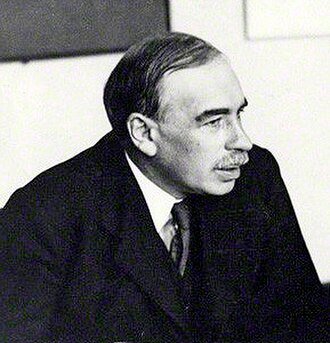
 AuthorJohn Maynard Keynes1883–1946
A Treatise on Probability, published by John Maynard Keynes in 1921, offers a far more general logic of uncertainty than the more familiar and straightforward classical theories of probability. This approach is known as the logical-relationist view and is regarded as the seminal account of the logical interpretation of probability, a line of thought later continued by works such as Carnap's Logical Foundations of Probability and E. T. Jaynes's Probability Theory: The Logic of Science.
For Keynes, generalised probability is a strictly logical relation between evidence and hypothesis, a degree of partial implication. Not all probabilities need be quantifiable or even comparable: sometimes there is no rational basis for preferring one of two alternatives, and in such cases it is reasonable to let caprice decide and not waste time on the debate. Keynes also stresses that the weight of an argument matters alongside its probability, that is, the amount of relevant knowledge available, which grows with each new piece of evidence even when that evidence lowers the probability.
The work is organised into five parts. The first sets out the fundamental ideas and criticises the overuse of the principle of indifference and several common fallacies. The second develops the fundamental theorems of probable inference, with a formalism likened to an appendix to Russell and Whitehead's Principia Mathematica, and includes Bayes's rule alongside previously unpublished work by W. E. Johnson. The third examines induction and analogy and argues that inductive arguments only establish that, relative to certain evidence, there is a probability in their favour. The fourth applies probability to philosophical and practical questions of conduct and criticises the expected utility hypothesis, especially in extreme cases. The fifth turns to the foundations of statistical inference.
Bertrand Russell, in a 1922 review, called it "undoubtedly the most important work on probability that has appeared for a very long time". With recent advances in machine learning and behavioural economics, interest in a logical approach that neither assumes an unattainable objectivity nor relies on the subjective views of its designers has grown, and with it renewed attention to Keynes's work.
Themes
Books to read
- A Treatise on Probability EnglishGutenberg
Other works by John Maynard Keynes
Original Filopedia text based on Wikipedia (en) and Wikidata.