Black Skin, White Masks
essay in psychology and social critique (psychoanalysis and anticolonial analysis) · 1952
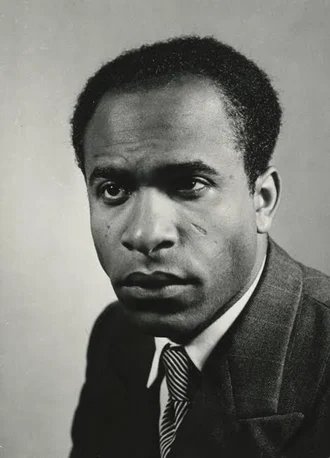 AuthorFrantz Fanon1925–1961
Black Skin, White Masks is a book published in 1952 by the Martinican psychiatrist and thinker Frantz Fanon. It was originally written in French under the title Peau noire, masques blancs, and combines historical analysis with a partly autobiographical reflection on the effects of racism and dehumanization that accompany colonial domination. Fanon draws on psychoanalysis to explain the feelings of dependency and inadequacy experienced by Black people in a world dominated by the West.
The central argument is that the colonized person, having lost his or her original culture and adopted that of the metropole, develops a divided self-perception and an inferiority complex. In an attempt to be accepted, the colonized subject tries to imitate and appropriate the cultural codes of the colonizer, which Fanon describes as wearing a "white mask". According to him, this behavior is most visible among ambitious, educated Black people who can afford the symbols of white culture, such as studying abroad, mastering the colonizer's language, or adopting his manners. Yet the respect they receive is superficial and does not alter the racist structure of society. The book also stresses that language does not merely communicate ideas but expresses power, and that racism reaches into emotional life, into romantic relationships, and into the way people view themselves.
The work includes a chapter on the psychopathology of the Black person, in which Fanon argues that white society teaches children from an early age to associate blackness with wrongness, through stories, comics, and other cultural media. He also examines novels by contemporary Black writers and offers a reading of Hegel's dialectic of master and slave. Toward the end, he proposes that the colonized abandon nostalgia for a mythical precolonial past and build a future of self-determination grounded in the present.
For decades the book received little attention. From the 1980s onward it became a worldwide reference point for anticolonial and antiracist thought, although in French-speaking countries it is regarded as a relatively minor work compared with Fanon's later political writings, such as The Wretched of the Earth. Its ideas have been taken up by movements in very different contexts, and the book has also drawn criticism for some of its remarks about women and homosexuality.
Themes
Other works by Frantz Fanon
Original Filopedia text based on Wikipedia (es) and Wikipedia (en) and Wikidata.