The Wretched of the Earth
political and psychological essay on decolonisation · 1961
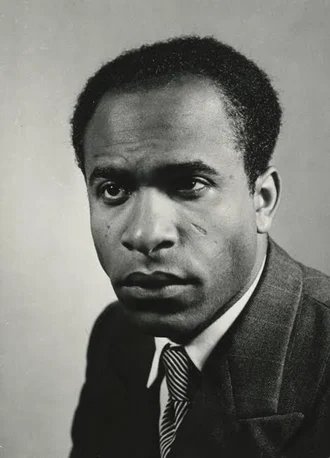 AuthorFrantz Fanon1925–1961
The Wretched of the Earth is the last book by Frantz Fanon, published in 1961 in France with a preface by Jean-Paul Sartre, through the publisher Maspero. It appeared during the Algerian War, when opposition to the conflict was growing and the Cuban armed struggle served as a reference for many anti-colonial movements. Fanon, a psychiatrist and thinker born in Martinique, died of leukaemia at the end of that same year, aged 36, shortly after seeing the first copy of the work. Its circulation was immediate and wide; the Spanish translation by Julieta Campos appeared in 1963.
The book is at once a psychiatric, political, cultural and historical diagnosis of colonisation, above all in Algeria and more broadly in Africa, and a call to the Third World to undertake a decolonising struggle capable of creating a new kind of human being. Fanon, a disciple of Aimé Césaire, adapts Marxist theory to the colonial context and is regarded as a precursor of postcolonial studies. His starting point is that colonisation systematically denies the other, depriving them of every attribute of humanity, which he expresses through the notion of the 'non-being'. The French title is taken from the first line of The Internationale, although the biographer Adam Shatz argues that it derives from a poem by the Haitian Jacques Roumain.
In the first chapter, 'On Violence', Fanon contends that decolonisation is always a violent process, because the colonial world rests on violence: the settler subjugates, humiliates and impoverishes, and the colonised accumulates an aggression that erupts in bloody struggles or is channelled through dance and trance. Decolonisation must redirect that repressed violence towards liberating action. Fanon also describes how the native population is divided among the worker, the colonised intellectual and the rural lumpenproletariat, and proposes that the dispossessed, who have nothing to lose, should lead the revolution, rather than an urban proletariat assimilated into the system. He criticises pacifism and compromises that dilute the movement, as happened in Gabon after independence.
In the essay 'On National Culture', Fanon examines how a national culture can emerge after colonisation. He rejects a nostalgic return to an idealised precolonial past, which often reproduces the coloniser's own clichés, as well as the search for a common African or 'Negro' identity, which he considers a dead end. For him, national culture is not a relic to be recovered but a reality built through the very struggle for liberation. Its reception was considerable: the book influenced liberation movements around the world and later postcolonial thought, though it has also been criticised for its rhetoric of violence and for its view of national culture.
Themes
Other works by Frantz Fanon
Original Filopedia text based on Wikipedia (es) and Wikipedia (en) and Wikidata.