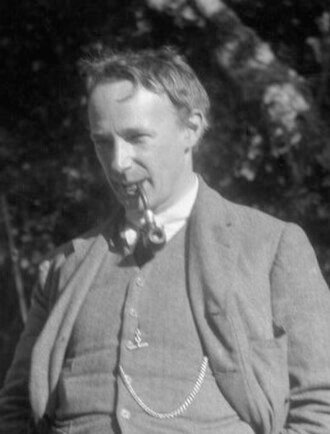
 AuthorG. E. Moore1873–1958
Principia Ethica is a book published in 1903 by the British philosopher George Edward Moore (1873–1958). It is one of the foundational works of twentieth-century moral philosophy. Its title refers to the «principles» of ethics, and its aim is to examine the foundations of the discipline itself, beginning with a seemingly simple question: what does it mean for something to be «good»?
Moore argues that goodness is a simple and indefinable concept. In his view, any attempt to define it in terms of natural properties—pleasure, as in Bentham's hedonism; utility, as in Mill; or greater evolutionary development, as in evolutionary ethics—commits what he called the naturalistic fallacy. His open question argument holds that if «pleasure is good» meant the same as «pleasure is pleasure», the sentence would be a tautology; yet it remains reasonable to ask whether what is pleasant is really good. This line of thought connects with Hume's distinction between is and ought, though Moore pursues it with greater precision.
The book distinguishes between what is good in itself and what is good as a means to something else, and it holds that our knowledge of intrinsic value rests on self-evident intuitions rather than on empirical facts. Moore also introduces the notion of the «organic whole»: the value of a whole is not always the sum of the values of its parts. To show that pleasure is not the only thing good in itself, he proposes the so-called «method of isolation», which asks us to imagine a beautiful world with no one to contemplate it and compare its value with that of an ugly one.
In the third part of the book he addresses what we ought to do. Moore criticises a simple form of consequentialism: although right actions tend to produce the greatest good, long-term consequences are too uncertain to serve as a direct guide. For this reason, duties are defined more modestly, as what generally produces better results than the probable alternatives within a reasonably near future, and determining them requires empirical investigation. Virtues, such as honesty, are understood as lasting dispositions to fulfil those duties.
The book was widely influential. Clive Bell held that, by opposing Spencer and Mill, Moore had freed his generation from utilitarianism. For the Bloomsbury Group it was almost a bible and the philosophical foundation of its aesthetic values; Leonard Woolf saw in it a way of continuing to live in a meaningless world, and the idea of the organic whole guided modernists such as Virginia Woolf. Its ethical intuitionism has also been regarded as a forerunner of non-cognitivist theories of morality, such as emotivism. John Rawls compared Moore's views with those of Hastings Rashdall in A Theory of Justice (1971), and Geoffrey Warnock judged his contribution to ethics less lasting than his work in other fields. Later, John Maynard Keynes, an early admirer of the book, dismissed as utopian in 1938 Moore's trust in human reasonableness.
Themes
Books to read
- Principia Ethica EnglishGutenberg
Original Filopedia text based on Wikipedia (es) and Wikipedia (en) and Wikidata.