A Treatise Concerning the Principles of Human Knowledge
philosophical treatise on epistemology and metaphysics · 1710
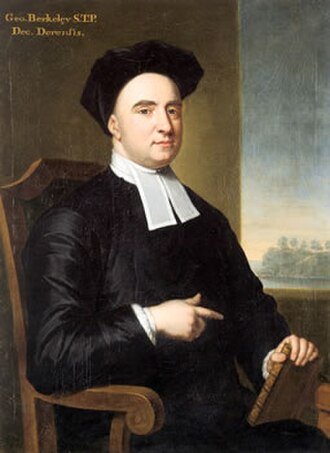 AuthorGeorge Berkeley1685–1753
A Treatise Concerning the Principles of Human Knowledge is a work by the Irish philosopher George Berkeley, published in 1710. It is the first part of a project that Berkeley intended to continue with a second part, which was never published. Its declared aim is to examine the first principles of human knowledge in order to uncover the causes of doubt, uncertainty, absurdity and contradiction that, in his view, had taken hold of philosophy.
The book is largely directed against the claims of his contemporary John Locke about the nature of perception. Like other empiricists, Locke and Berkeley agreed that our experiences depend on the mind, but Locke held that the primary qualities of bodies (extension, shape, motion, solidity and number) exist independently of any perceiver, in an inert matter. Berkeley rejects this distinction: these qualities, like the secondary ones (colours, tastes, sounds), are ideas existing in the mind, and ideas can only resemble other ideas. From this comes his well-known formula esse est percipi, "to be is to be perceived", which summarises his idealism: there is no unthinking material substance serving as a support for ideas.
The work opens with an introduction in which Berkeley criticises abstract ideas and the view that words signify abstractions, arguing that names designate particular or general ideas rather than abstract ones. The first part then develops his central thesis, shows the consequences of rejecting matter, and confronts the objection that objects exist even when no one perceives them. His reply rests on the claim that any imagined object is in fact an idea present in some mind, including that of the subject doing the imagining.
The argument has a theological consequence. The world of ideas, which we perceive with regularity and coherence, requires a mind that sustains it continuously, and Berkeley concludes that this mind is God. For this reason the work is also read as a defence of theism against atheism and scepticism.
Its reception was considerable and controversial. Many readers found it paradoxical, and Samuel Johnson famously refuted it by kicking a stone. Nevertheless, the book shaped later empiricism, particularly that of David Hume, and remains a central text for discussions of perception, the existence of external objects and the limits of abstract language.
Themes
Books to read
- A Treatise Concerning the Principles of Human Knowledge EnglishEPUB 144 KBRead online
Other works by George Berkeley
Original Filopedia text based on Wikipedia (es) and Wikipedia (en) and Wikidata.