Reflections of an Unpolitical Man
extended essay on war and German culture · 1918
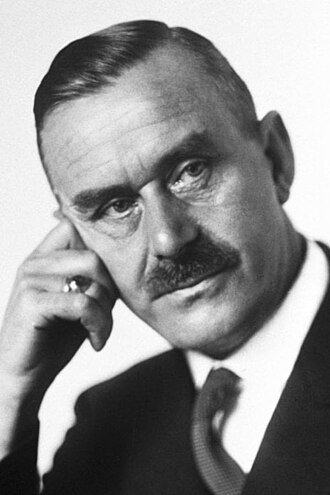 AuthorThomas Mann1875–1955
Reflections of an Unpolitical Man (German: Betrachtungen eines Unpolitischen) is a book of almost six hundred pages that Thomas Mann published in 1918, shortly before the end of the First World War. Unlike his brother Heinrich, Mann supported the German war effort, and the work served to justify and define his political position, which distanced him from his brother's more liberal outlook.
The book grew out of three wartime essays that Mann wrote between 1914 and 1915, in which he defended the German position and, in particular, the invasion of neutral Belgium. Criticism from the French pacifist Romain Rolland, and an essay by Heinrich Mann on Émile Zola that indirectly alluded to Thomas, led him to expand that material into a complete book. Mann wrote most of the text between 1915 and 1918, interrupting his work on The Magic Mountain to do so.
The core of the work is the distinction between culture and civilization. For Mann, civilization stands for the reason, enlightenment, moderation and skepticism associated with the West, while German culture embodies the spiritual, the inner life and the sublimation of the demonic. From this opposition he attacks the so-called "civilization's literary men," whom he accuses of treating culture as a means rather than an end in itself. Although the author presented the book as apolitical, it became a highly political text that defended a supposedly German path against the democracy of France, Britain and the United States.
The work moves through several chapters: a prologue, reflections on German protest against the Catholic and Western world, a critique of the bourgeoisie and of the 1848 revolution, a settling of accounts with his brother and with Rolland, and a long chapter on politics addressing suffrage, democracy and the legacy of Bismarck. Mann leans heavily on Schopenhauer, Wagner and Nietzsche, as well as on Dostoevsky, Goethe and other nationalist writers.
The reception was controversial. Mann never fully repudiated these ideas, even after becoming one of the leading opponents of Nazism among German exiles. Over time the book has been read both as a record of his intellectual development and as an example of the dangers of subordinating culture to political ends. It was also taken up by some figures of the so-called Conservative Revolution, which reinforced its problematic reputation.
Themes
Other works by Thomas Mann
- Buddenbrooks 1901
- Tonio Kröger 1903
- Death in Venice 1912
- The Magic Mountain 1924
- Mario and the Magician 1930
- Lotte in Weimar 1939
- Joseph and His Brothers 1943
- Doctor Faustus 1947
- The Holy Sinner 1951
- The Black Swan 1953
- Confessions of Felix Krull 1954
Original Filopedia text based on Wikipedia (es) and Wikipedia (en) and Wikidata.