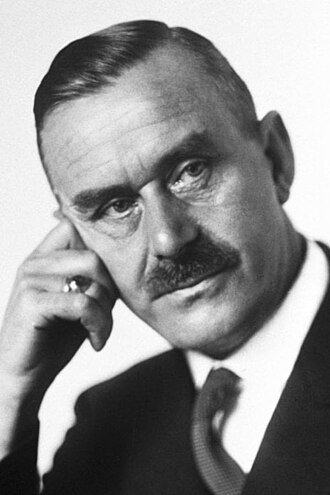
 AuthorThomas Mann1875–1955
Lotte in Weimar is a novel by Thomas Mann published in 1939. Mann conceived it in the shadow of Goethe and, in a sense, as a response to The Sorrows of Young Werther, a work written more than a century and a half earlier. Its starting point is a real figure: Charlotte Kestner, née Buff, one of Goethe's youthful romantic interests, who returns to Weimar after more than forty years apart.
Goethe had courted her when they were young, but she was already engaged and later married to a man she truly loved, so the romance was never consummated. Goethe reshaped these events into Werther, a book that brought him early fame and made Charlotte, without her choosing it, a partly unwilling public figure for much of her life. Her return is partly motivated by a wish to settle the wrongs she feels the fiction did to her.
The novel asks what sacrifices a genius demands from those around him, whether Goethe kept his distance even from friends and family, whether he exploited others' talents and sympathy, and whether he was guided mainly by his own interests. Most of the book unfolds as dialogues between Charlotte and other residents of Weimar, each offering an opinion on Goethe's genius. Only in the last third, beginning with the interior monologue of the seventh chapter, does the reader confront Goethe directly and hear what he thinks of the affair. The novel balances respect for its subject with a demythologizing gaze. It also had an unexpected afterlife: in 1946 Hartley Shawcross quoted at the Nuremberg trials a passage attributed to Goethe that was in fact Mann's own formulation.
Themes
Other works by Thomas Mann
- Buddenbrooks 1901
- Tonio Kröger 1903
- Death in Venice 1912
- Reflections of an Unpolitical Man 1918
- The Magic Mountain 1924
- Mario and the Magician 1930
- Joseph and His Brothers 1943
- Doctor Faustus 1947
- The Holy Sinner 1951
- The Black Swan 1953
- Confessions of Felix Krull 1954
Original Filopedia text based on Wikipedia (en) and Wikidata.