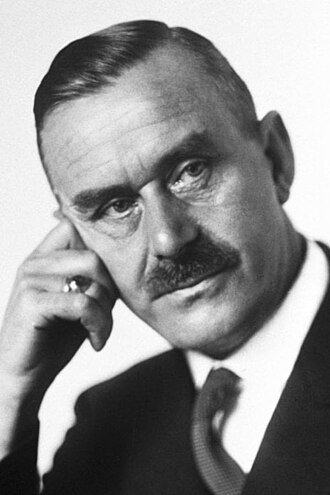
 AuthorThomas Mann1875–1955
Tonio Kröger is a novella by Thomas Mann, published in 1903. Its protagonist, who shares obvious traits with the author himself, is caught between two worlds that seem irreconcilable: that of art and that of respectable bourgeois society. Mann wrote it between December 1900 and November 1902, and at first he intended to call it "Litteratur", a title that would have pointed precisely to the work's central theme. It was a success with both readers and critics, and it remains the most widely read of Mann's books.
The novella is divided into nine chapters, with a turn in the plot at the fifth. The first four chapters trace Tonio's youth and his first steps as a writer, covering about sixteen years with a notable time jump between the third and fourth. From the fifth onward, the narrative centers on a journey north, when the protagonist returns to his hometown on the Baltic. Rather than external events, the work rests on mental processes, reflections and conversations. The critic Marcel Reich-Ranicki observed that there is hardly any plot, but rather mood-paintings and theoretical, above all aesthetic, discussions, and that the chapters are bound together by recurring motifs and figures.
Tonio is the son of a northern grain merchant and a mother of southern origin, from whom he inherits dark eyes and a certain sensitivity. As a child he feels toward ordinary people a mixture of superiority and envy: he observes them with lucidity, yet admires their innocent vitality. His unrequited love for Hans Hansen, a fair, athletic and uncomplicated boy, teaches him that whoever loves more always suffers more. With Inge Holm and Magdalena Vermehren he repeats the same pattern of longing and distance. After his father's death and his mother's departure, he settles in Munich, where his work matures and his name becomes a byword for literary excellence, while his personal life fills with disorder and remorse. Already famous, he talks with the painter Lisaweta Ivanovna about what an artist is: someone who must hold life at a distance in order to create, yet who longs for precisely what he renounces possessing.
The journey north, toward Denmark and finally his hometown, serves as a test of his identity. On visiting his father's house and being mistaken by a police officer for a wanted swindler, Tonio confirms his sense of being a stranger to respectable society. The work offers no definitive resolution, only a fragile reconciliation between the artist and life.
The novella is largely autobiographical and is often read alongside "Death in Venice", with which it forms a pair: both explore the figure of the artist and Mann's ideas about art, though in very different tones. Its contribution to the theory of love, through its portrayal of a youthful passion, also makes it a key text on sentimental innocence. Mann acknowledged in a letter that Tonio's admiration for Hans Hansen was modeled on the feeling he himself had once held for a schoolmate in Lübeck.
Themes
Books to read
Other works by Thomas Mann
- Buddenbrooks 1901
- Death in Venice 1912
- Reflections of an Unpolitical Man 1918
- The Magic Mountain 1924
- Mario and the Magician 1930
- Lotte in Weimar 1939
- Joseph and His Brothers 1943
- Doctor Faustus 1947
- The Holy Sinner 1951
- The Black Swan 1953
- Confessions of Felix Krull 1954
Original Filopedia text based on Wikipedia (es) and Wikipedia (en) and Wikidata.