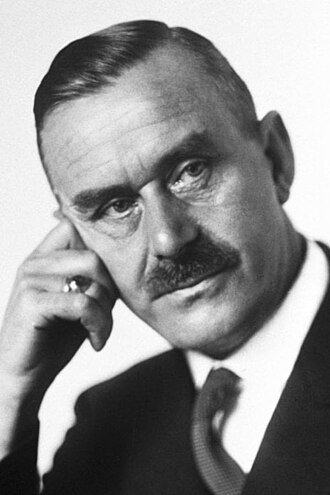
 AuthorThomas Mann1875–1955
Buddenbrooks is the first novel by German writer Thomas Mann, published in 1901 when the author was only twenty-six. Mann conceived it as a family saga in which he wanted to set two opposing worlds against each other: that of the businessman and that of the artist. The project took shape around 1897, and Mann partly found his inspiration in Richard Wagner's operatic tetralogy The Ring of the Nibelung. Finished in July 1900, the book appeared in two volumes in early 1901. The first print run of a thousand copies sold with difficulty, but the second edition of 1903 was a success, and by 1918 about a hundred thousand copies had been sold. Over time it became Mann's most popular work, especially in Germany, where readers have cherished its intimate portrait of nineteenth-century bourgeois life.
The novel follows a prosperous family of grain merchants in Lübeck between 1835 and 1877, across four generations. At first the Buddenbrooks embody the financial solidity and social prestige of a Hanseatic city, but over the years their fortune and their family ideals gradually erode. Characters who put their personal happiness ahead of the welfare of the family firm meet with setbacks, and those who do not are not spared either, since values change and old hierarchies are challenged by Germany's rapid industrialisation. Historical events of the period, such as the Revolutions of 1848, the Austro-Prussian War and the founding of the German Empire, remain in the background and have little direct bearing on the characters' lives.
The book draws on Mann's own family history and on the atmosphere of Lübeck, which the text recognises without naming. This closeness drew criticism of the young author, who was accused of writing a scandalous and defamatory novel about recognisable people; Mann answered by defending a writer's right to draw on his own experience. Literarily, the work extends the realist tradition of the nineteenth century, with an ironic narrator, a remarkable gift for characterisation and a growing attention to decline. That outlook reflects the influence of Schopenhauer on the young Mann. For its plot, tone and wealth of detail, Buddenbrooks is regarded as one of the great European novels of early modernity.
Themes
Books to read
Other works by Thomas Mann
- Tonio Kröger 1903
- Death in Venice 1912
- Reflections of an Unpolitical Man 1918
- The Magic Mountain 1924
- Mario and the Magician 1930
- Lotte in Weimar 1939
- Joseph and His Brothers 1943
- Doctor Faustus 1947
- The Holy Sinner 1951
- The Black Swan 1953
- Confessions of Felix Krull 1954
Original Filopedia text based on Wikipedia (es) and Wikipedia (en) and Wikidata.