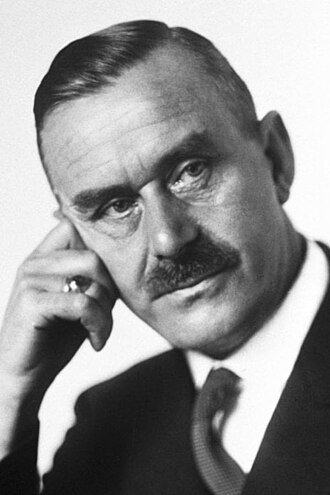
 AuthorThomas Mann1875–1955
Joseph and His Brothers is the most extensive work of Thomas Mann, the German Nobel laureate in Literature, and one of the major novels of the twentieth century. It appeared in four parts between 1933 and 1943, although Mann worked on it for some sixteen years. The project grew out of a journey to the Near East in 1925, and he began the first volume in December 1926. The first two books were published in Germany, while the last came out in exile in California, after Mann had settled in the United States.
The novel retells the stories of Genesis, from Jacob to Joseph, and places them in the historical setting of the Amarna Period in ancient Egypt in the fourteenth century BC. Mann drew on the scholarship of his day, notably Alfred Jeremias's work emphasising Babylonian influences on the biblical texts, as well as on the writings of Dmitry Merezhkovsky. Each book is divided into seven chapters, and the first and last volumes also open with a prelude. The structure follows Jacob's path through the loss of Rachel, Joseph's exile at the hands of his brothers, his rise at the Egyptian court and, finally, the blessing and death of the patriarch.
A central concern is Mann's reflection on the status of mythology and on the Late Bronze Age mindset towards mythical truths. Episodes from Genesis are linked with myths from other cultures, such as the descent of Inanna and the harrowing of hell, and Abraham appears as the man who "discovered God". Mann regarded it as his greatest achievement, and the work has been widely read and translated, becoming a reference point for discussions of religion, history and storytelling.
Themes
Other works by Thomas Mann
- Buddenbrooks 1901
- Tonio Kröger 1903
- Death in Venice 1912
- Reflections of an Unpolitical Man 1918
- The Magic Mountain 1924
- Mario and the Magician 1930
- Lotte in Weimar 1939
- Doctor Faustus 1947
- The Holy Sinner 1951
- The Black Swan 1953
- Confessions of Felix Krull 1954
Original Filopedia text based on Wikipedia (es) and Wikipedia (en) and Wikidata.